

Quantum Performance Inc
  • Home
  • Services
    • Services Overview
    • Generating TOTAL Ownership, Alignment & Engagement
    • Culture Analysis
    • Strategy Development
    • Building High Performance Teams
    • Executive Coaching & Leadership Development
    • Supporting Merger & Acquisition Integration
  • About
    • About Gershon Mader
    • Testimonials
    • Clients
  • Blog
  • Resources
    • My Book
    • Leadership on a Napkin
    • Leadership Tip of the Week
    • News & Published Articles
    • Case Studies
  • Contact
  • Click to open the search input field Click to open the search input field Search
  • Menu Menu

Stop trying to predict the future!

5 July 2017/in Leadership Development, Organizational Culture, Strategic Planning

Every year, executives around the world go through the customary tradition known as ‘strategic planning’. They emerge from days or weeks of meetings with a sacred document that — if adhered to — will increase their sales, make their services shine, engage their staff and secure their future. Well, that’s the story they tell us in business school anyway.

But unfortunately – as Professor Robert Kaplan of the Harvard Business School and his associate, David Norton of the Balanced Scorecard Collaborative tell us – as much as 90 percent of all corporate strategies fall short of their stated objectives.

From my many years of global experience, helping executive teams generate a clear and compelling direction for their organizations, I have observed several key misunderstandings and myths that lead to wishful, wasteful, or less-than-worthwhile strategic planning efforts and outcomes.

One of the biggest myths is that in order to create an effective and relevant strategy you have to be able to accurately predict the future in terms of market, technology and/or consumer trends. Many executives seem to believe this.

But, nothing could be further from the truth. In today’s rapidly changing technological, consumption, and economic environments, no one has a crystal ball, and no one knows what the future will bring.

In the last few years, we have probably seen more examples than ever before of the predictable not materializing, and the unpredictable becoming reality.

In today’s world, it’s often the new, unknown, small players that burst into the market unexpectedly and overnight they dictate new consumption and business trends, and how we live our lives. Take as an example the likes of Uber, Google, Facebook, Twitter, LinkedIn, Paypal and many other ‘use-to-be startups’.

So, any attempts to predict the future could easily be misleading and lead to misjudgment and failure.

Unfortunately, many executives still believe that there is a “right” strategy for their organization and their job is to identify and capture it. They believe that if you get the content of your strategy right, the success of that strategy is a foregone conclusion. They assume that the substance of the strategy must be composed of realistic objectives based on the most accurate and valid data and information. In many organizations, this belief leads to “analysis paralysis”.

Those who try and get the future right typically do so by analyzing the past. They create their strategic plans by looking at their rearview mirror. They determine their future goals by benchmarking and analyzing their own, as well as others’, historical performance and trends. That often leads to merely repeating past cycles and trends.

In addition, what goes unrecognized and unaddressed is that no strategy can ever be right or reasonable enough to account for all the events that might emerge on the road to its fulfillment. Therefore, perfect content, as a path to success, is an illusion and leads to increased investment of resources in the pursuit of the one true strategy that will win the day.

In reality, any strategy is only as good as people’s ownership and commitment to its fulfillment.

Even the most accurate and well-crafted plan will fail if people don’t own it and take accountability for delivering it. Therefore, you are better off having 100% ownership for a strategy that is 80% accurate, then have less than 80% ownership for a strategy that is 100% accurate.

Of course, you need a healthy understanding and respect for past and present trends. I  believe there is plenty of experience, expertise and smarts in most organizations. However, as Alan Kay, ex-Apple Fellow, said,

“The only way to predict the future is to create it“.

The most powerful strategies are informed by the past, but influenced and driven by future thinking. This means a team envisions the future, takes a stand, and commits to a direction and destination as a responsible, plausible, and a calculated risk. Then everyone commits to that destination – not because it is perfectly accurate, but because they believe it is the right future to pursue.

The process of creating a powerful and effective strategic plan should not be an accounting and forecasting exercise that is informed by some leadership, but rather the opposite – a leadership exercise that is informed by some accounting and forecasting. It requires not a calculator, but the courage and conviction to inspire everyone to be their best and get on the same page.

As Academy Award-winning director Francis Ford Coppola famously said:

 “The first step in making a great movie is getting everyone involved to be making the same movie.”
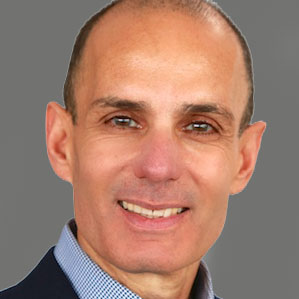
Gershon Mader

Founder and President of Quantum Performance Inc., a management consulting firm specializing in generating total alignment and engagement in organizations.

His work has encompassed a broad range of industries including banking, telecommunications, manufacturing, entertainment, real estate, retail, startups and non-profits.

Share this entry
  • Share on Facebook
  • Share on X
  • Share on WhatsApp
  • Share on LinkedIn
  • Share on Reddit
  • Share by Mail
https://quantumperformanceinc.com/wp-content/uploads/2016/07/future_fJehP_wd.jpg 1259 1888 gmader https://quantumperformanceinc.com/wp-content/uploads/2026/06/QPI-Logo-v2.png gmader2017-07-05 00:01:332017-07-04 19:01:17Stop trying to predict the future!
0 replies

Leave a Reply

Want to join the discussion?
Feel free to contribute!

Leave a Reply Cancel reply

Your email address will not be published. Required fields are marked *

Latest Posts

  • The Nod That’s Killing Your Organization
  • The Frozen Middle Didn’t Freeze Itself
  • The moment a room changes
  • Accountability: A Privilege or a Burden?
  • Stop Prioritizing If You Want a Breakthrough

Sign-up for my blogs

Be in the know – receive my latest blog, updates and leadership insights and inspiration straight to your inbox.
* = required field
I'd like to subscribe to the

By subscribing, you are agreeing to receive my regular newsletter via email.  You can unsubscribe at any time using the link provided in the emails sent.

Categories

  • Coaching
  • Communication
  • Employee Engagement
  • Leadership Development
  • Living Courageously
  • Organizational Culture
  • Productivity
  • Strategic Commitment
  • Strategic Planning
  • Team Building

MY BOOK

The Power of Strategic Commitment
X Logo X Logo Followon X RSS Feed Logo RSS Feed Logo Subscribeto RSS Feed

Contact

Gershon Mader

M: +1 (416) 716-4112
E: gmader@quantumperformanceinc.com

Sign-up to my weekly insights

Subscribe to my Substack for deeper leadership insights, transformation stories, and fresh thinking shared throughout the week.

Follow us on Social Media
xyoutubelinkedinmediumsubstack
© Copyright - Quantum Performance Inc / Gershon Mader | Privacy Policy | Website by Creative Control
  • Link to LinkedIn
  • Link to X
Link to: Are you asking for what you really want? Link to: Are you asking for what you really want? Are you asking for what you really want? Link to: Don’t confuse ‘consensus’ with ‘alignment’ Link to: Don’t confuse ‘consensus’ with ‘alignment’ Don’t confuse ‘consensus’ with ‘alignment’
Scroll to top Scroll to top Scroll to top

This site uses cookies. You can choose to accept, decline the use of cookies or select the ones you accept by selecting Settings.

Accept cookies settingsDo not allow cookiesOptions

Cookie and Privacy Settings


How we use cookies

We may request cookies to be set on your device. We use cookies to let us know when you visit our websites, how you interact with us, to enrich your user experience, and to customize your relationship with our website.

Click on the different category headings to find out more. You can also change some of your preferences. Note that blocking some types of cookies may impact your experience on our websites and the services we are able to offer.

Essential Website Cookies

These cookies are strictly necessary to provide you with services available through our website and to use some of its features.

Because these cookies are strictly necessary to deliver the website, refusing them will have impact how our site functions. You always can block or delete cookies by changing your browser settings and force blocking all cookies on this website. But this will always prompt you to accept/refuse cookies when revisiting our site.

We fully respect if you want to refuse cookies but to avoid asking you again and again kindly allow us to store a cookie for that. You are free to opt out any time or opt in for other cookies to get a better experience. If you refuse cookies we will remove all set cookies in our domain.

We provide you with a list of stored cookies on your computer in our domain so you can check what we stored. Due to security reasons we are not able to show or modify cookies from other domains. You can check these in your browser security settings.

Google Analytics Cookies

These cookies collect information that is used either in aggregate form to help us understand how our website is being used or how effective our marketing campaigns are, or to help us customize our website and application for you in order to enhance your experience.

If you do not want that we track your visit to our site you can disable tracking in your browser here:

Other external services

We also use different external services like Google Webfonts, Google Maps, and external Video providers. Since these providers may collect personal data like your IP address we allow you to block them here. Please be aware that this might heavily reduce the functionality and appearance of our site. Changes will take effect once you reload the page.

Google Webfont Settings:

Google Map Settings:

Google reCaptcha Settings:

Vimeo and Youtube video embeds:

Other cookies

The following cookies are also needed - You can choose if you want to allow them:

Privacy Policy

You can read about our cookies and privacy settings in detail on our Privacy Policy Page.

Privacy Policy
Accept settingsHide notification only